
Mixed martial arts — usually shortened to MMA — is a combat sport that combines striking and grappling under one ruleset. A modern MMA athlete may use boxing-style punches, kicks associated with arts such as Muay Thai or karate, wrestling takedowns, judo throws, and Brazilian jiu-jitsu submissions. The important point is that MMA is not simply a collection of separate styles. At competitive level, it has developed into a sport with its own tactics, training methods, judging criteria, equipment and culture.
That is why “What is MMA?” is a more interesting question than it first appears. A beginner sees punches, kicks and grappling. A practitioner sees transitions: the moment a striker changes stance to defend a takedown, the way cage position affects a wrestling exchange, or how a submission threat can create space for strikes. MMA is defined by the ability to connect ranges that are separated in many traditional or single-discipline sports.
The main ranges of MMA
Most MMA action can be understood through four broad ranges.
Striking range
This is where athletes exchange legal punches, kicks, knees and other permitted strikes. Boxing, kickboxing, Muay Thai and karate can all influence an athlete’s approach, but techniques are adapted because takedowns and clinches are always possible.
Clinch range
The clinch is the close-contact space where fighters can pummel for position, attack with short strikes, seek trips or throws, and fight for control against the fence. It is one of the places where MMA becomes visibly different from pure boxing or kickboxing.
Takedown and wrestling range
Wrestling and judo-derived skills help an athlete move a fight from standing to the floor, keep it standing, or reverse position. A successful takedown is not automatically the end goal: what happens after the takedown matters.
Ground range
On the ground, athletes work for positional control, legal strikes and submissions. Brazilian jiu-jitsu is a major influence, but MMA grappling differs from submission-only grappling because strikes change posture, timing and risk.
Which martial arts are used in MMA?
There is no single required base. IMMAF describes modern MMA as drawing from striking and wrestling arts including boxing, Thai boxing, judo and Brazilian jiu-jitsu, while athletes also arrive from karate, taekwondo, sambo and other systems.
Early style-versus-style contests encouraged the idea that one martial art would prove superior. Modern training produced a different answer: successful competitors need an integrated skill set. A boxer who cannot defend takedowns has a problem. A grappler who cannot enter safely through strikes has a problem. An athlete who is technically strong in separate disciplines but cannot transition between them also has a problem.
How does an MMA fight work?
Professional MMA is commonly contested in a fenced or ring-style competition area under a regulated ruleset. Exact rules depend on the athletic commission, sanctioning body, promotion and jurisdiction, so a fan should never assume every organization is identical.
Under the widely used Unified Rules framework, bouts are divided into timed rounds. Fighters can win by methods including knockout, technical knockout, submission and judges’ decision. Fouls define actions that are not permitted; MMA is regulated combat, not “anything goes.”
When a bout reaches the judges, rounds are scored using the 10-Point Must System under the applicable rules. Judging is its own subject, because visible activity and actual scoring value are not always the same thing.
What makes MMA different from kickboxing, boxing or grappling?
The defining difference is cross-range consequence.
A boxer can adopt a stance optimized around punches because takedowns are not part of boxing. A grappler can focus on positional and submission exchanges without legal punches to the head. In MMA, every choice is connected to other threats.
A deep boxing stance can make the lead leg easier to attack. A kick can create a takedown opportunity. A takedown attempt can open an uppercut. A submission threat can force a reaction that improves striking position. Athletes therefore adapt techniques rather than importing them unchanged.
Is MMA a martial art or a sport?
It is reasonable to describe MMA as both a combat sport and a modern martial-arts discipline. Its historical ingredients come from many arts, but contemporary MMA gyms teach integrated MMA as a specific practice. Students drill wall wrestling, strike-to-takedown combinations, ground-and-pound positioning and transitions that do not belong neatly to one older discipline.
This matters culturally as well. MMA now has its own gym etiquette, coaching language, training rounds, equipment conventions and visual identity.
What equipment do MMA athletes use?
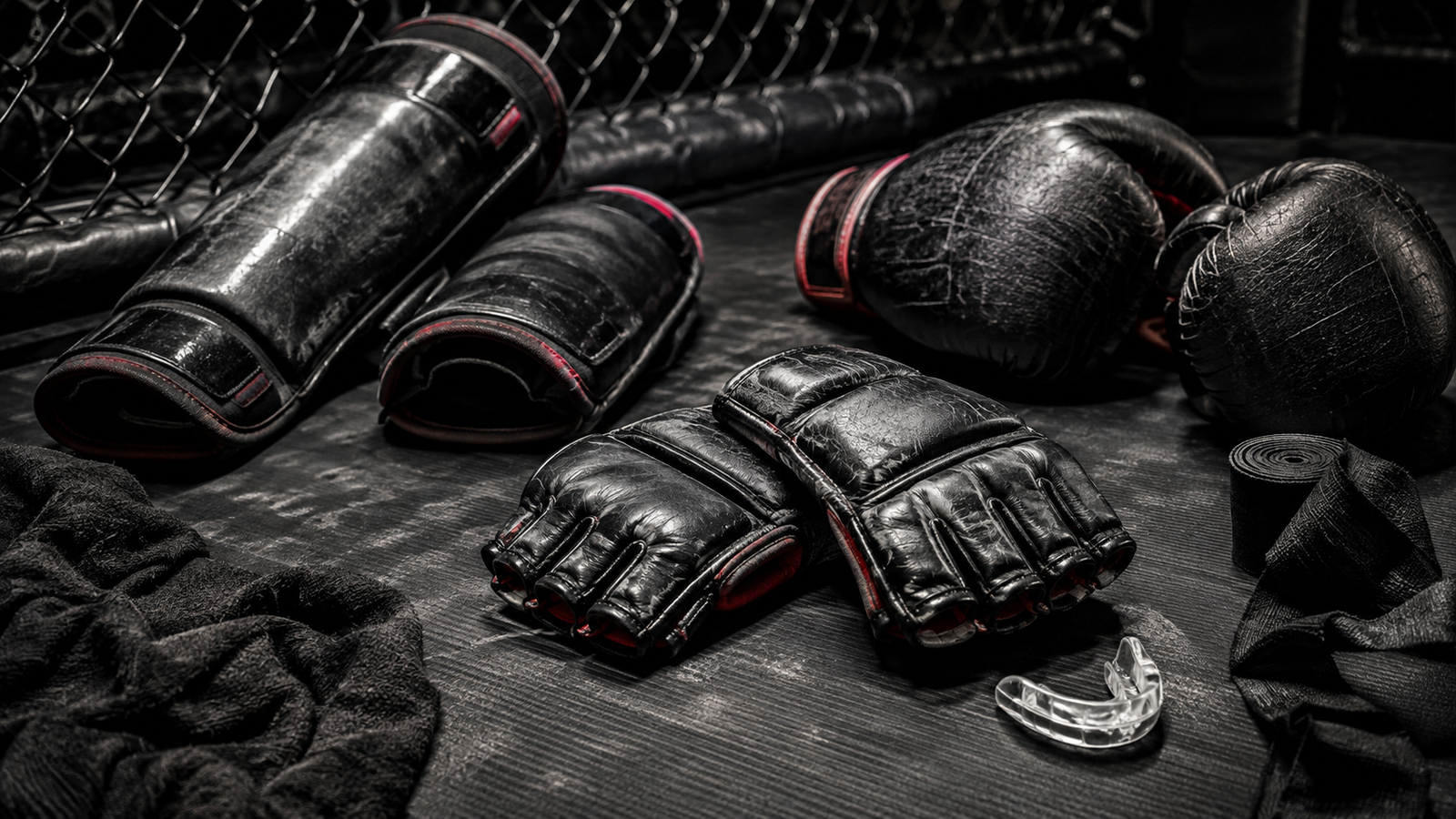
Competition equipment varies by ruleset, but MMA is visually associated with open-finger gloves that allow gripping. Training usually involves a wider equipment ecosystem: hand wraps, boxing gloves for many striking rounds, MMA gloves for specific drills, shin guards, mouthguards, heavy bags, focus mitts, Thai pads, grappling mats and other protective or training equipment.
Training gear and lifestyle apparel should not be confused. A graphic MMA T-shirt can represent fight culture without being technical fight equipment. That distinction is useful for shoppers as well as beginners entering a gym.
Why has MMA become its own culture?
MMA sits at the meeting point of sport, gym culture and martial-arts identity. Fans may first discover it through a major promotion, but the culture is broader than any one organization. Amateur competition, local gyms, coaches, grappling rooms, striking classes and independent fight communities all contribute to it.
That cross-pollination also affects design and streetwear. Gloves, hand wraps, cages, round markers, corner stools, heavy bags and gym typography have become recognizable visual language even outside competition.
The simplest way to understand MMA
Think of MMA as a sport built around one question: can an athlete remain effective as the fight changes range?
The strongest competitors are not merely good punchers, wrestlers or submission artists. They understand how to connect those skills while managing position, time, risk and the rules. Once a new fan understands that, MMA becomes much easier to read — and much more interesting to watch.
From TATSU
MMA-inspired tees and hoodies built around the culture this article covers — no generic designs, no noise.
Sources and further reading
- IMMAF — What is MMA? — Primary overview of MMA and its component disciplines.
- Association of Boxing Commissions — Unified Rules — Primary rules hub; re-check current documents before publication.
- UFC — Introduction to MMA — Secondary rules/terminology overview.
Related reading
Continue exploring: A Short History of Modern MMA · How MMA Scoring Works · MMA Weight Classes Explained · How Long Is an MMA Fight? · How Can an MMA Fight End? · MMA Glossary · MMA Training Equipment Explained · What Is Martial Arts Streetwear? · Tatsu Story Born On The Mats · What Does Tatsu Mean