
“Karate vs MMA” can mean two different questions. One asks which discipline would win under a particular ruleset. The more useful question asks how the sports are built differently.
Karate is a broad family of martial-arts traditions with multiple styles and competition formats. MMA is a modern combat sport that deliberately integrates striking and grappling. Because the rules create different incentives, even techniques with similar names can be trained and applied differently.
Karate is not one competition format
Modern sport karate commonly includes kata and kumite, but rule systems vary between organizations and styles.
Kata is a formal performance of structured techniques and movement. Kumite is opponent-based sparring/competition. Point-fighting rules reward correctly executed scoring actions under their own timing, control and target criteria.
Traditional dojos may also train basics, partner drills, conditioning, self-defense exercises and equipment such as makiwara depending on the style. It is inaccurate to define all karate only by one tournament ruleset.
MMA is built around range integration
MMA competition allows both striking and grappling within its rules. That means every striking exchange exists beside the possibility of a takedown, clinch or ground transition.
A karate stance or kick can be useful in MMA, but it may be modified because the athlete must defend leg kicks, punches, clinches and takedowns. Conversely, an MMA athlete training karate-derived movement may select only the parts that fit an integrated game.
Striking distance and rhythm
Many sport-karate athletes develop exceptional entry/exit timing, long-range movement and the ability to score during brief exchanges. Those attributes have influenced MMA fighters who use karate backgrounds.
MMA exchanges can continue after the first clean strike. A competitor may be punched while exiting, kicked in the leg, clinched or taken down. That changes the cost of distance choices.
Grappling is the largest structural difference
Karate competition generally does not become an extended ground-grappling contest. MMA can move from standing to takedown to control, strikes and submissions.
Therefore, a karate specialist entering MMA needs wrestling and submission-grappling competence. The issue is not whether the karate technique “works.” It is whether the athlete can use it while solving the additional problems created by MMA.
Scoring philosophy differs
Karate kumite scoring rewards techniques according to its competition rules. MMA judging, under the Unified Rules framework, evaluates rounds with effective striking and grappling as the primary criteria.
That creates different tactical incentives. A sharp technique that scores in point karate may be tactically excellent even if the exchange stops quickly. In MMA, the athlete must also manage what follows the contact.
Equipment and presentation
Karate competitions may use a karate gi and organization-specific protective equipment. MMA athletes compete in attire and gloves specified by their ruleset and commission.
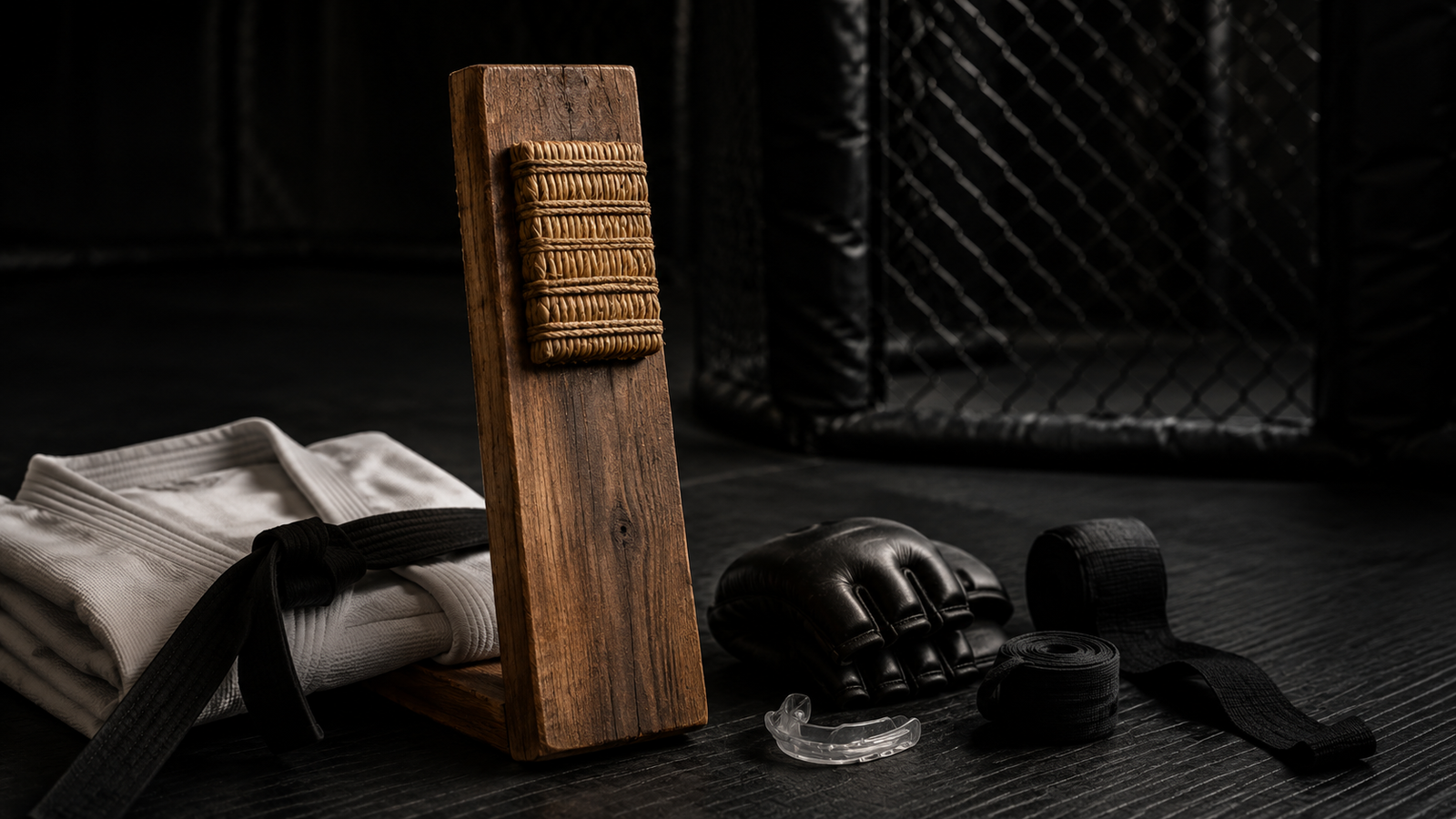
The cultural imagery is different too. Karate is associated with dojo practice, belts, gi, kata, makiwara and Japanese/Okinawan terminology. MMA has a more hybrid visual language: open-finger gloves, cages, hand wraps, corner equipment and cross-disciplinary gym culture.
Can karate work in MMA?
Yes — but “karate works in MMA” is not the same as saying a karate-only ruleset prepares someone automatically for MMA.
Karate backgrounds can contribute:
- distance management;
- explosive entries;
- stance switching or lateral movement depending on style;
- kicking variety;
- timing developed through kumite.
An MMA athlete must integrate those strengths with boxing defense, wrestling, clinch work and ground skills.
Which should a beginner train?
Choose based on the experience you want.
Karate may appeal if you value a structured dojo curriculum, kata alongside partner work, stylistic tradition and progression through a system. MMA may appeal if your main goal is an integrated ruleset combining striking and grappling from the beginning.
Gym quality matters more than internet arguments. Visit the facility, watch a class, ask about coaching and safety, and choose a place where you will train consistently.
The useful conclusion
Karate and MMA are not interchangeable products and do not need to be enemies. Karate can be a deep martial art and competition system in its own right, while MMA is designed around cross-range integration. The most interesting comparison is not “Which one is real?” but what behaviors each ruleset rewards, and how athletes adapt when they cross from one environment to another.
Sources and further reading
- IMMAF — What is MMA? — Primary overview of MMA’s integrated discipline structure.
- Association of Boxing Commissions — Unified Rules — Primary reference for current professional MMA rules.
- NBC Olympics — Karate 101: Rules — Historical Olympic-format overview of kata and kumite; current karate organizations may use updated rules.
Related reading
Continue exploring: What Is MMA? · What Is Martial Arts Streetwear? · Martial Arts Apparel vs Fight Gear