
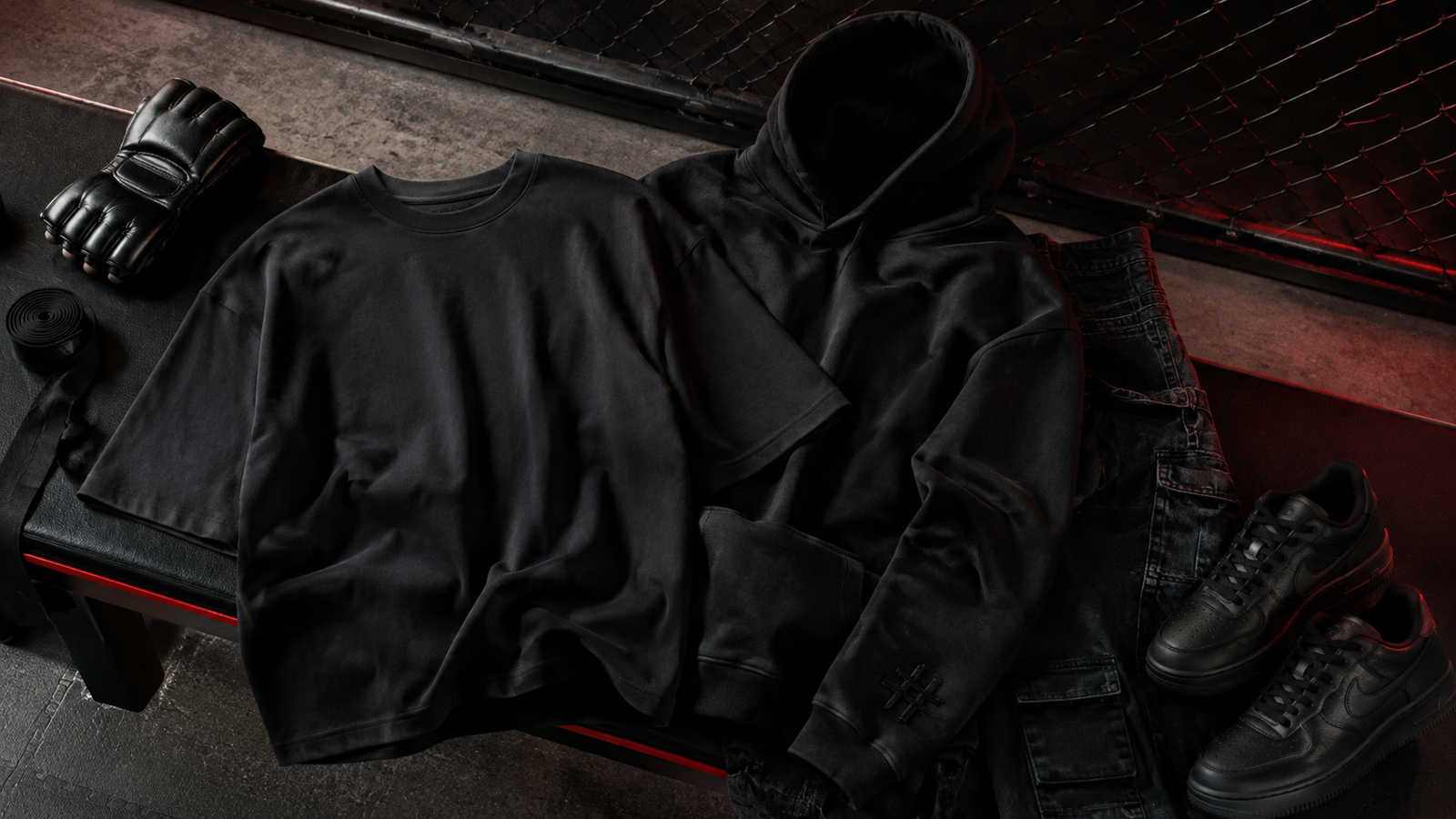
Martial arts streetwear is lifestyle clothing that draws its identity from combat-sport and dojo culture without necessarily being technical equipment for training or competition. A tee can reference rounds, gloves, hand wraps or a makiwara and still be everyday apparel. That distinction is the foundation of the category.
The overlap is visible across the current market. Independent brands position collections around jiu-jitsu, boxing, Muay Thai and broader combat culture, while major MMA properties have released collaborations with established streetwear labels. The category is real — but it is not one visual style.
The gym has a visual language
Combat sports generate recognizable objects and rituals:
- worn gloves;
- frayed hand wraps;
- heavy bags;
- cage mesh;
- round cards and timers;
- corner stools and tape;
- dojo equipment;
- chalk, sweat marks and distressed training surfaces.
Streetwear can translate those references into graphics, typography and texture. The best work feels specific enough that a practitioner recognizes the source rather than seeing generic “fighter” clip art.
Identity matters more than costume
A martial-arts shirt does not need dragons, flames and a giant fighter silhouette to communicate the niche. In fact, obvious symbols can become cliché when every brand uses them the same way.
Practitioner-aware design often focuses on smaller truths: the shape of a real four-ounce glove, a believable hand-wrap texture, the battered surface of a heavy bag, or an inside joke about late rounds.
That is streetwear’s role: turn subcultural detail into identity.
Lifestyle apparel is not technical fight gear
This is the most important product-language rule.
A cotton graphic tee inspired by MMA is MMA streetwear or martial-arts apparel. It is not automatically a rash guard, compression top, fight shirt or competition garment. A hoodie can express gym culture without being designed to spar in.
Technical claims require technical evidence. If a product has not been verified for moisture management, compression, abrasion resistance or competition use, the description should not imply those properties.
Clear language helps customers and reduces the risk of misleading search results.
Why streetwear fits martial arts
Streetwear has historically been shaped by communities that use clothing as a membership signal — music, skateboarding, art, neighborhoods and other subcultures. Martial arts creates similar identity behavior. People spend years in the same gyms, develop shared language and organize routines around training.
For many practitioners, the sport is not something they do only during a class. It influences friends, travel, media, weekend schedules and how they describe themselves. Clothing becomes one way to carry that identity off the mat.
Three common design directions
1. Equipment-led graphics
Gloves, wraps, bags, pads, belts or training objects become the hero. Accuracy matters because practitioners notice when equipment is drawn incorrectly.
2. Typography-led graphics
Round references, gym language and short practitioner phrases can create strong designs when the type feels connected to fight posters, athletic print or worn training environments rather than generic motivational merchandise.
3. Heritage-led graphics
A design can draw from the history and visual culture of a specific art. This requires more care because cultural references should be researched rather than mixed randomly. Karate, Muay Thai and Brazilian jiu-jitsu do not share one interchangeable aesthetic.
What makes the category credible?
Credibility comes from specificity and restraint.
A credible martial-arts streetwear brand:
- knows the difference between sports and their equipment;
- avoids fake performance claims;
- does not imply unauthorized affiliation with fighters or promotions;
- treats martial-arts cultures as more than decoration;
- creates garments people would wear even when there is no event that night.
The strongest test is simple: would a practitioner recognize that the designer understands the training environment?
How martial arts streetwear supports discovery
For an ecommerce brand, this category can connect informational content with commercial pages. An article about MMA gloves can link naturally to a design inspired by fight gloves. A piece explaining hand wraps can support a collection whose artwork references wraps. A karate history or equipment article can link to an accurately themed karate collection.
The content should still answer the reader’s question first. Product links work best when they are contextual, not inserted into every paragraph.
The takeaway
Martial arts streetwear is not “fight gear with nicer graphics.” It is a lifestyle category built around the symbols, routines and identities of martial-arts communities. Its commercial opportunity comes from being authentic enough for practitioners and visually strong enough to stand on its own as streetwear.
From TATSU
MMA-inspired tees and hoodies built around the culture this article covers — no generic designs, no noise.
Sources and further reading
- UFC — 2026 Streetwear Brand Collaboration Announcement — Current example of combat-sport IP intersecting with streetwear.
- Hanuman Fight — Combat Sports Streetwear — Independent market example covering jiu-jitsu, Muay Thai and boxing apparel; do not copy content/designs.
- GRPL Wear — Independent BJJ/streetwear market example; used only to verify the category exists.
Related reading
Continue exploring: How to Style MMA Graphic T-Shirts · Martial Arts Apparel vs Fight Gear · Martial Arts Gift Guide · What Is MMA? · Dojo Ink Standard No Generic Designs · How To Wear Mma T Shirt Outside Gym