The scene
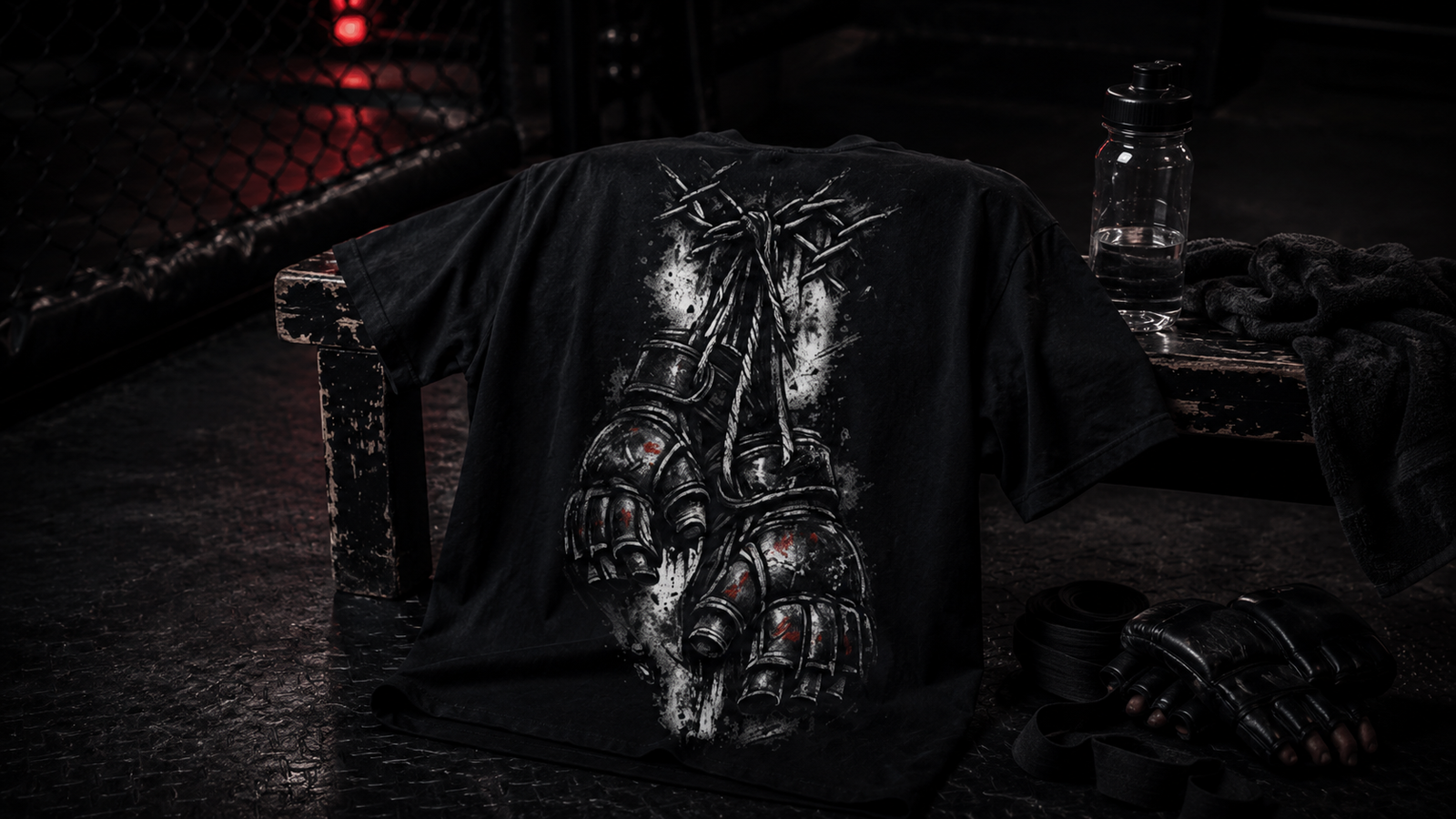
The gym is empty. The mats are mopped, the music is off, the lights are low. Everyone is gone — except the few who are still there, finishing the work that would not fit into normal hours. They are the last ones out. Not the most talented, not the loudest, but the ones for whom the session is not over until they decide it is over. The design is named for them, and it does not need an explanation to anyone who has been that person.
After the bell
“After the bell” is where the name gets its teeth. The bell ends the round — everyone else stands down. The last ones out are the ones still moving after it, running the extra round, drilling the extra rep, doing the work that no coach asked for and no audience will see. Fight culture has a word for people like this. TATSU just put it on a garment.
The pieces
The design exists in both house cuts, so the sentiment scales with the season:
- The tee — oversized boxy, 240gsm, S–2XL. The everyday wear for the person who trains after work.
- The hoodie — 380gsm heavyweight. For the cold months, when being last out also means being warm.
Both follow the house rule: ink from the language of the dojo, no generic designs, no humans, no religious symbols. If it would not earn respect on the mats, it does not get printed.
Why this design matters
Designs with real meaning age better than designs with real hype. A stock-art tiger says nothing about you; “Last Ones Out” says everything about your relationship to the work. It is a badge, not a decoration — the kind of garment you wear because you recognize yourself in it.
The last word
The whole Cage Series is live now, every piece made to order and free US shipping over $75. If you are the last one out, the design is waiting. The bell does not decide when you stop. You do.