
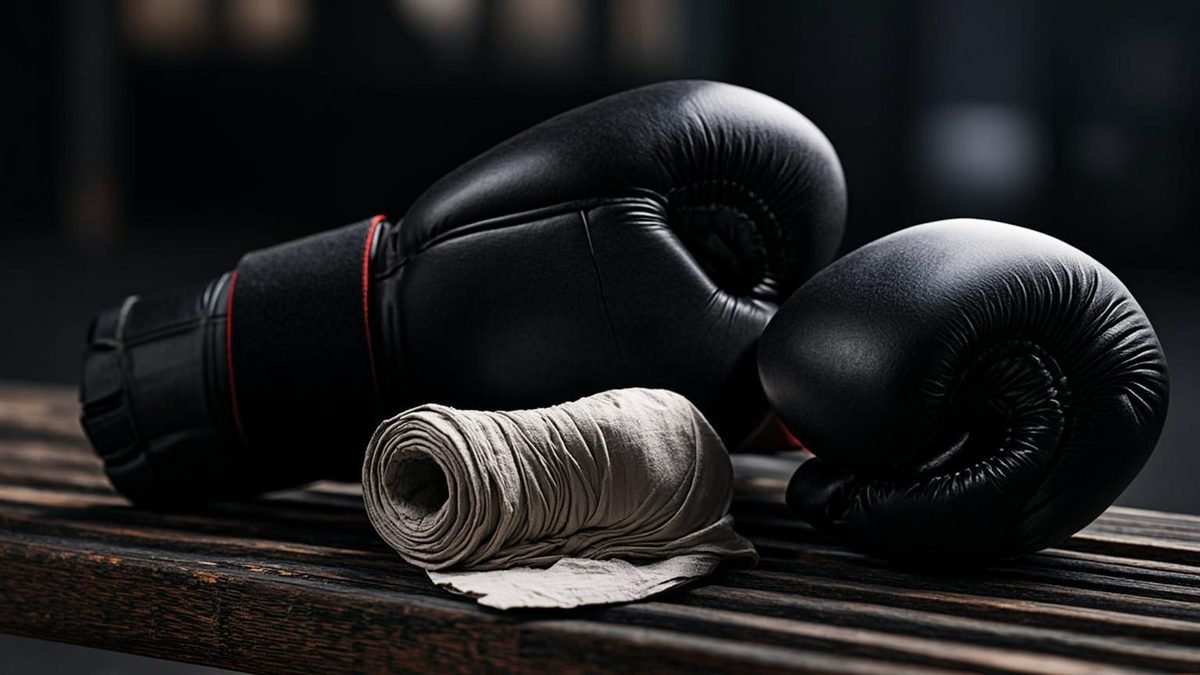
MMA gloves and boxing gloves are both padded hand equipment, but they solve different problems. A boxing glove is built around a sport dominated by punching. An MMA glove must allow punching and enough finger freedom for wrestling and submissions. That single difference changes the entire shape of the equipment.
This guide explains visible and functional differences, not a recommendation to spar in a particular glove. Gyms and coaches set equipment requirements based on the drill, athlete level and safety policy.
The easiest visual difference: the fingers
Competition-style MMA gloves are commonly open-finger designs. The fingers remain available for grips, pummeling, hand fighting and grappling. Padding is concentrated over the striking surface rather than enclosing the entire hand like a traditional boxing glove.
Boxing gloves enclose the fingers and form a larger padded striking surface. The construction supports repeated punching but is not designed for the kind of independent finger use required in MMA grappling.
Padding and overall volume
Professional MMA competition gloves have historically been much lighter and lower-volume than typical boxing gloves. ABC committee material describes commission-approved MMA gloves at least four ounces, while boxing training gloves are often substantially heavier depending on purpose and athlete.
Do not translate that observation into “less padding is better” or “more padding is always safer.” Glove safety depends on construction, fit, rules, the training task and how equipment is used.
Why MMA gloves need mobility
Imagine trying to finish a double-leg takedown, pummel for an underhook or control a wrist while wearing a large closed boxing glove. The design would interfere with the sport.
MMA gloves therefore have to balance competing needs:
- enough structure for regulated striking;
- finger mobility for grappling;
- wrist closure and fit;
- rules-compliant dimensions and construction for the event.
That balance is why MMA fight gloves have a distinct silhouette.
Why boxing gloves still appear in MMA gyms
MMA athletes do not train every round in competition gloves. Boxing-style gloves are commonly used for many pad, bag and controlled striking sessions because the training objective is different from a live MMA contest.
A typical MMA gym may use several glove types across the week: larger gloves for designated striking work, specialized sparring equipment, and MMA-style gloves for drilling transitions that require realistic gripping.
The exact choice belongs to the gym and coach.
Competition glove versus training glove
“MMA glove” is not one single product category. Competition gloves, training gloves and sparring-oriented MMA gloves can differ in padding and construction. A consumer should therefore read the manufacturer’s intended use rather than buying by silhouette alone.
The same applies to boxing gloves: bag gloves, sparring gloves and competition gloves are not interchangeable labels.
Hand wraps underneath gloves
Competition hand wrapping is regulated. Historical ABC guidance describes gauze and tape procedures for professional contests, while gym training usually uses reusable fabric wraps or another coach-approved system.
The important distinction is competition procedure versus everyday training practice. A social-media image of a fighter wrapping hands does not tell you which regulation applies.
Can you hit a heavy bag with MMA gloves?
Some manufacturers sell MMA-style gloves for bag or training use, but the correct equipment depends on the product design, the athlete and the training plan. Beginners should not assume a small competition-style glove is appropriate for every high-volume bag session simply because professional fighters compete in small gloves.
Follow the product’s intended use and gym guidance.
Which glove represents MMA culture visually?
The open-finger fight glove is one of MMA’s most recognizable visual objects. It instantly communicates grappling-plus-striking in a way a generic boxing glove does not. Boxing gloves, however, remain part of the training-room reality of many MMA athletes.
For martial-arts apparel and design, this distinction is useful: equipment can be referenced accurately without pretending a lifestyle product is itself protective gear.
Quick comparison
Choose the term based on the actual object:
- MMA fight/training glove: open fingers, lower profile, designed to preserve grappling function.
- Boxing glove: closed hand, larger padded form, designed around punching-specific use.
Neither category is a universal replacement for the other. The right glove is the one designed and approved for the specific sport, drill and ruleset.
From TATSU
MMA-inspired tees and hoodies built around the culture this article covers — no generic designs, no noise.
Sources and further reading
- ABC — Committee Report on Unified Rules for MMA — Historical professional MMA glove and handwrap guidance.
- Association of Boxing Commissions — Unified Rules — Current rule documents take precedence over legacy guidance.
- UFC — The Official Fight Glove — Promotion-specific example of modern MMA fight-glove design; not a universal equipment standard.
Related reading
Continue exploring: MMA Training Equipment Explained · Why Fighters Wear Hand Wraps · Heavy Bag vs Focus Mitts vs Thai Pads · Martial Arts Apparel vs Fight Gear