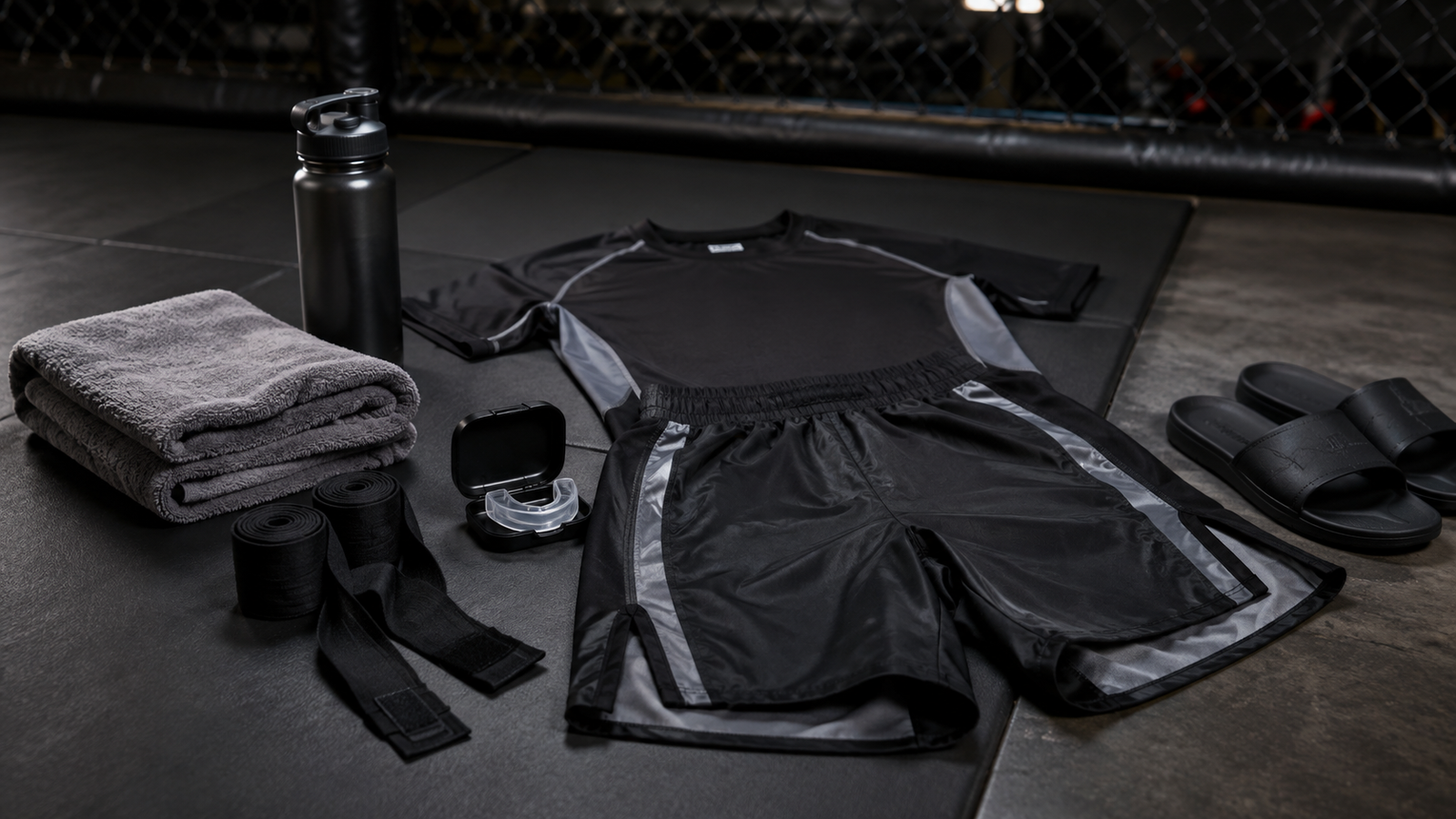
For a first MMA class, the best outfit is usually simpler than beginners expect: clean athletic clothing that lets you move freely, with no hard pieces that can scratch a partner. The exact requirements depend on whether the class is MMA, boxing, kickboxing, wrestling, gi jiu-jitsu or no-gi grappling, so the gym’s own instructions always come first.
This guide helps you ask the right questions before you arrive.
Start by checking the class type
“MMA gym” can describe a facility offering several separate classes. What you wear for a boxing session may differ from what you need for no-gi grappling.
Before buying anything, ask:
- Is this an MMA fundamentals class or a single-discipline class?
- Are gloves or shin guards required?
- Does the gym loan equipment for trial classes?
- Is a uniform required for jiu-jitsu or karate sessions?
- Are shorts with pockets, zippers or metal pieces prohibited?
Those answers save money and awkwardness.
A basic first-class clothing setup
For a general no-gi or MMA fundamentals session, many gyms accept:
- an athletic T-shirt or close-fitting training top;
- flexible athletic shorts without dangerous hardware;
- clean training clothing with enough range of motion;
- any protective equipment specifically required by the coach.
Loose casual clothing can snag during grappling. Clothing with exposed zippers, buttons or hard plastic/metal details may scratch partners.
Barefoot versus shoes
Many martial-arts mat areas are barefoot zones. Shoes worn outdoors should not go onto grappling mats unless the facility specifically allows designated footwear.
That is both etiquette and hygiene. Follow the gym’s mat rules rather than copying what you saw at another facility.
Gloves, wraps and shin guards
Do not assume you need to arrive with professional-style MMA fight gloves. A beginner striking class may use larger boxing-style training gloves. Kickboxing or MMA partner drills may require shin guards. Hand wraps can be required or strongly recommended for glove work.
Ask the gym for preferred sizes/types before purchasing.
Mouthguard and other personal protective items
Contact classes may require a mouthguard. Some athletes also use other sport-appropriate protective equipment depending on anatomy, gym rules and session intensity.
Fit and suitability matter more than appearance. If a coach specifies equipment, follow the specification.
Rash guards and grappling tops
A rash guard is a close-fitting technical top commonly used in grappling. It is a functional training garment, not simply any shirt with martial-arts graphics.
That distinction matters online: a cotton MMA-themed T-shirt should not be advertised as a rash guard unless it is actually manufactured and intended as one.
Lifestyle apparel versus training apparel
Martial-arts streetwear belongs in the gym community, but it is not automatically technical sportswear.
A graphic T-shirt or heavyweight hoodie may be perfect for arriving at the gym, warming up off the mat, traveling to an event or representing the culture day to day. It should not be marketed as moisture-wicking, compression, competition-ready or protective unless those properties are verified.
That honest category distinction helps shoppers and strengthens brand trust.
Hygiene is part of the uniform
Clean clothing matters in close-contact sports. Grappling involves direct contact with people and mats, so turning up in yesterday’s unwashed training kit is not acceptable gym etiquette.
Useful habits include:
- start class in clean gear;
- keep nails trimmed;
- cover or report skin issues according to gym policy;
- shower after training when possible;
- wash training clothing after use;
- keep dirty equipment separated from clean clothes.
Specific health policies belong to the gym and governing body.
Jewelry and hard accessories
Remove jewelry and other hard accessories before partner training unless the gym explicitly instructs otherwise. Rings, watches, necklaces and similar items can create injury or snagging risks.
What not to worry about
You do not need to “look like a fighter” on day one. Good gyms care more about cleanliness, willingness to learn and respect for partners than expensive branded equipment.
Arrive early, tell the coach it is your first class, and ask where to put your belongings and shoes.
A simple first-day checklist
The correct first-class outfit is the one that lets you train safely, hygienically and within the gym’s rules — not the one that looks most “MMA” in a mirror.
From TATSU
MMA-inspired tees and hoodies built around the culture this article covers — no generic designs, no noise.
Sources and further reading
- IMMAF — What is MMA? / Competition Rules — Primary sport and safety context.
- IMMAF — Rules & Policies — Use when discussing current amateur requirements; do not substitute generic gym advice for competition rules.
Related reading
Continue exploring: MMA Training Equipment Explained · Martial Arts Apparel vs Fight Gear · What Is Martial Arts Streetwear? · How to Style MMA Graphic T-Shirts · Fight Camp Wardrobe Tee Hoodie System